11 - 13 November 2025
Tunis, Tunisia
Workshop and High-Level Meeting in Tunis with representatives of the Libyan justice system and governance actors
From 11 until 13 November 2025, the ‘Access to Justice in Libya’ project’s research team, consisting of Leiden University’s Van Vollenhoven Institute (VVI) and Benghazi University’s Centre for Law and Society Studies (CLSS) organised two events in the context of the project’s draft final report, and its draft recommendations for a National Strategy for Access to Justice in Libya.
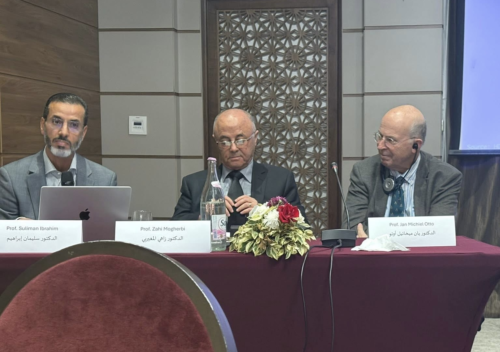
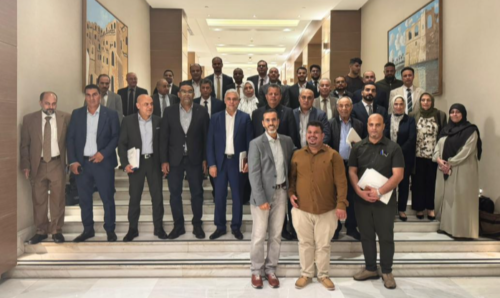
On 11 and 12 November, the research team organised a workshop in Tunis, bringing together 35 Libyan justice sector actors and 10 members of the project team. The participants came from different Libyan justice institutions, and included former and current judges, private lawyers, public lawyers, public prosecutors, academic and legal researchers, and members of the High Institute for the Judiciary. During the workshop, the findings and preliminary recommendations of the project’s final report on Access to Justice in Libya were shared with participants, forming the basis for discussion, exchange and mutual learning among and between justice sector actors. Throughout the two days of workshop, the project team presented findings and guided the participants through small-group and plenary discussions, among others on the role of the Libyan legal framework, courts, and public lawyers in ensuring fair, efficient and inclusive access to justice for people in Libya.
The workshop was followed by a one-day High-Level Meeting on 13 November, which brought together 7 senior representatives from different fields of governance in Libya and the project team. Participants represented the arenas of government, political society, economic society, bureaucracy, civil society, and the judiciary. Through presentations and plenary discussions, these senior governance representatives shared their perspectives and experiences related to the project’s research findings and preliminary recommendations.
The lively and constructive exchanges throughout the three days of Workshop and High-Level Meeting produced a wealth of insights from various perspectives to feed into the finalisation of the project’s final reports and suggestions for a National Strategy on Access to Justice in Libya. It also helped make the findings and preliminary recommendations known to actors across Libyan justice and governance institutions, in order to encourage the future adoption and implementation of recommendations stemming from the research.
In the final phase of the project, the ‘Access to Justice in Libya’ team will integrate the feedback and develop a finalised version of the final report and recommendations for the National Strategy – which will be presented to key stakeholders during the project’s final conferences in Tripoli in January, and Leiden in February 2026.